Death Salience
Humans are afraid of death. It is permanent, it leaves grief for loved ones, and it marks the end of a journey, a journey that might have been better in the future but is abruptly cut short.
When humans confront and accept death and impermanence, it is referred to as death salience. It is a well-known concept in Terror Management Theory, which explains how humans cope with the awareness of mortality.
In Meditations by Marcus Aurelius, specifically in Book Seven, an unconventional piece of advice appears:
Consider yourself to be dead, and to have completed your life up to the present time, and live according to nature the remainder which is allowed you.
This passage suggests a reset: to pause and consider that you are already dead, and that everything from this moment forward is simply the remainder.
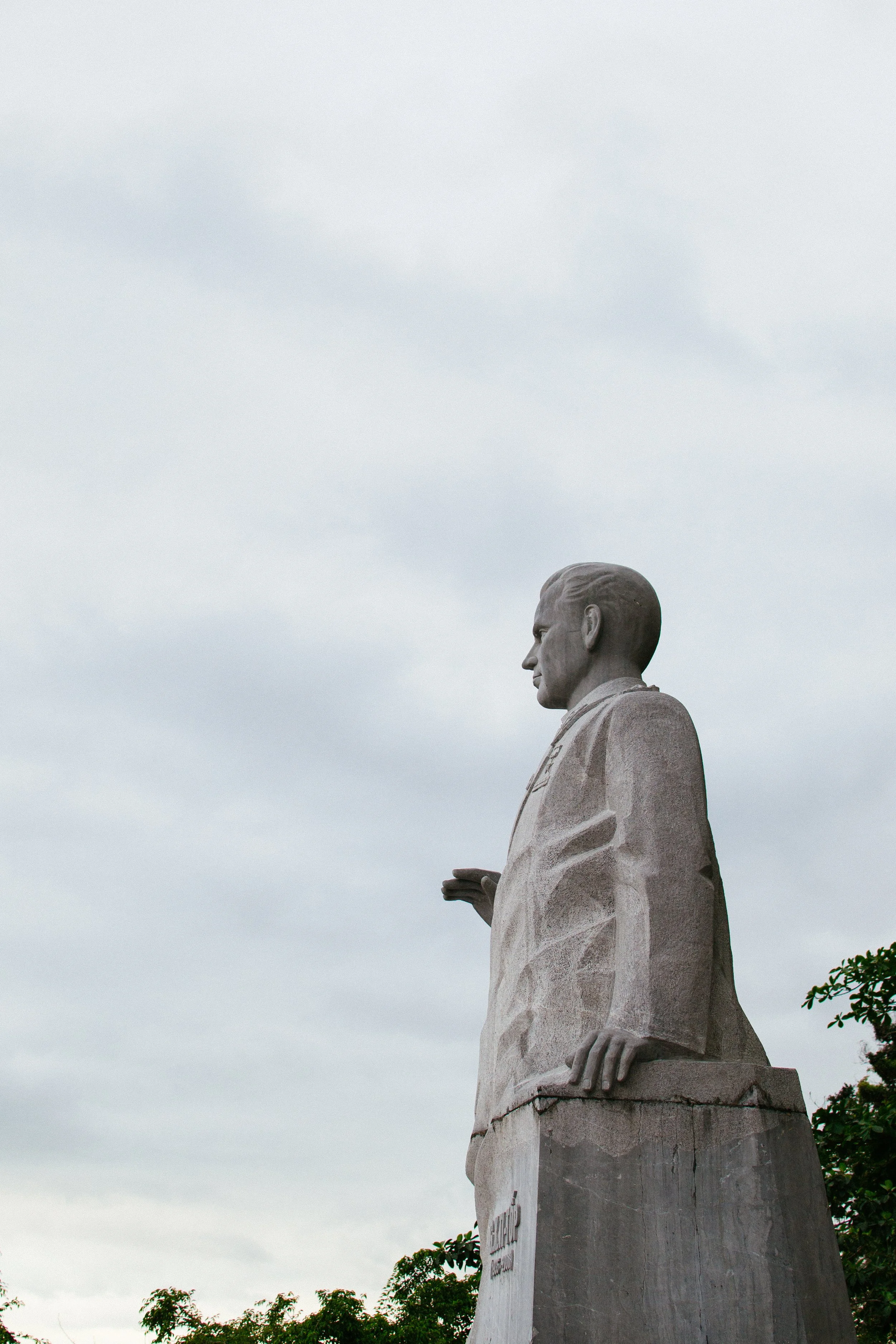
Ti Tốp Island
Ha Long Bay, 2025
Inducing Death Salience Early
Most cultures introduce death salience early by allowing young people to attend funerals and participate in the funeral process. Stories about death are also commonly told. The censorship of death is relatively new and has become more prominent in modern times. However, does death salience bring something valuable to society? Why do societies memorialize death?
Death salience is known to strengthen preexisting beliefs because it triggers a phenomenon called worldview defense. When people become aware of the impermanence of life, they tend to defend their worldview as a psychological response to existential uncertainty. This can benefit a culture by strengthening in-group cohesion and fostering a sense of shared sacrifice or even martyrdom.
However, without strong self-esteem, death salience can create anxiety. This anxiety may lead individuals to cling excessively to cultural values rather than personal values, which in turn can contribute to extremism.
Letting the Anxiety Flow
I see people who are not aware of impermanence as more dangerous than those who are. Ecclesiastes constantly reminds us of impermanence, as do many other classical works. Death is often inseparable from the great literature of the past.
However, distraction leads us to ignore impermanence. Death becomes a tragedy, and many deaths become statistics. The news numbs us to death, and we begin to ignore it. One tragedy might trigger mortality salience, but we grow numb to the others. When we see people as statistics, as normal phenomena explained in a more rationalistic way, we tend to soften death. It becomes a form of intellectualization, a way to ease anxiety.
Then mortality salience peaks again when death comes close, when it is in front of our eyes rather than on a screen. We see death as it truly is, and in doing so, we fully embrace impermanence once more.
It is better to go to a house of mourning
than to go to a house of feasting,
for death is the destiny of everyone;
the living should take this to heart.
Frustration is better than laughter,
because a sad face is good for the heart.
The heart of the wise is in the house of mourning,
but the heart of fools is in the house of pleasure.
Ecclesiastes 7:2–4 (New International Version)
Starting New
Going back to the passage in Meditations, “Consider yourself to be dead, and to have completed your life up to the present time…” Consider it completed. A death has already passed, and everything now is the remainder. It seals the past and allows us to see what we have as a gift.
What should you be anxious about, and why strengthen your beliefs defensively, when you can simply act now? From this moment on, everything is a remainder.
